![[99%tech]](https://substackcdn.com/image/fetch/$s_!vl72!,w_120,h_120,c_fill,f_webp,q_auto:good,fl_progressive:steep/https%3A%2F%2Fsubstack-post-media.s3.amazonaws.com%2Fpublic%2Fimages%2Fcae24093-688e-4321-a6fa-ee9385f8979c_1024x1024.png)
![[99%tech]](https://substackcdn.com/image/fetch/$s_!Sljl!,e_trim:10:white/e_trim:10:transparent/h_72,c_limit,f_auto,q_auto:good,fl_progressive:steep/https%3A%2F%2Fsubstack-post-media.s3.amazonaws.com%2Fpublic%2Fimages%2F02f85460-45dd-47b2-a64c-f9e2bf0372af_1500x1000.png)

When I started in venture in 2013, one of the first books I read was Bill Draper’s The Startup Game. Since then he became a friend and mentor.
Bill died last week. He was 98.
For those of you who did not know Bill, he was a legend. He founded Sutter Hill Ventures in 1965. Ronald Reagan put him in charge of the Export-Import Bank. He ran the UNDP. He raised the first American venture fund dedicated to India before India had the venture ecosystem it enjoys today. Then he built a venture philanthropy, and was still co-chair of that board when he died.
I got to know Bill in 2014, when I started Kauffman Fellows, a two-year global fellowship that trains venture investors and encourages us to seek mentorship. I asked him. He had no particular reason to respond to my email. He met with me regularly while I worked through the questions every young investor has and is usually too proud to ask out loud. Later, when I was thinking about starting Fluent, he was one of the people I called. He told me to go do it.
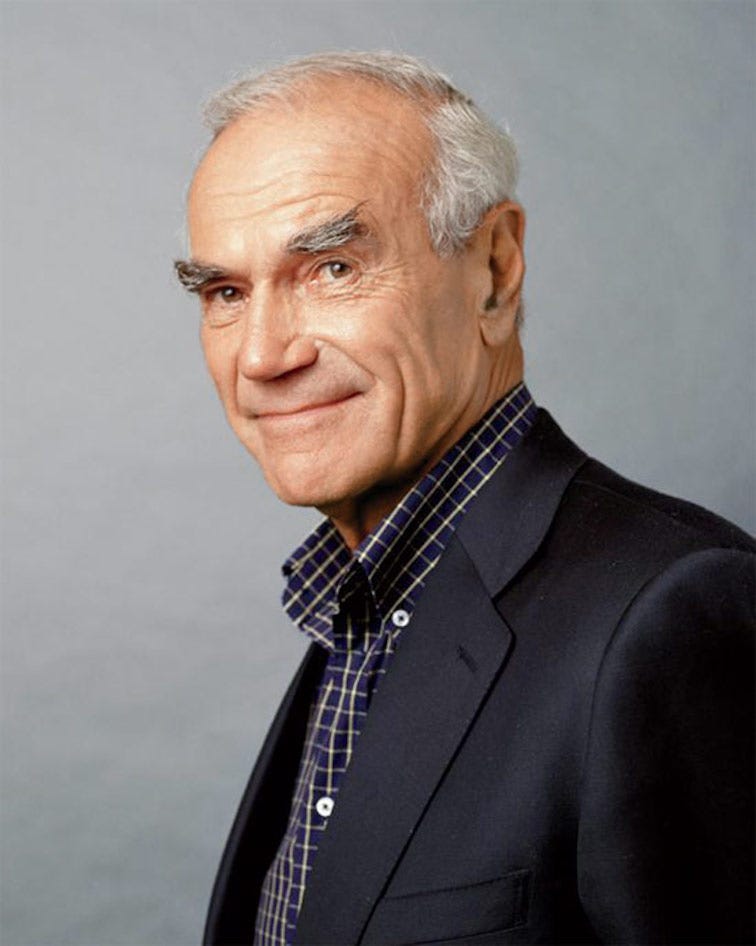
Five things stayed with me.
1. Character is the asset
One of my favorite stories about Bill’s family was about $1.5 ashtray. When he was eight, his mother had taken an ashtray from a hotel. His father turned the car around after two hours, drove two hours back, and when the hotel tried to simply give him the ashtray, insisted on paying for it. Bill, telling the story seventy years later, echoes the lesson his father had instilled: he “was dead honest and very clear about his values.”
Character is a big part of every aspect of the job. Reflecting on the worst part of venture (and the one we have to do most): “I say no far more often than I’d like,” he told the Chronicle in 2011. “For every hundred entrepreneurs, we say yes to four or five. Saying no is the worst part of the job.”
Rejection is arguably the only thing a VC does at scale. We spend our energy on the yes, which we do about ten times a year, and improvise the no, which we do five hundred times. Bill went on to talk about how to say no constructively and supportively.
2. Bet with conviction, and it is ok to be wrong
In 1929 Bill’s father took his entire annual bonus and, instead of paying down the family mortgage, put it into a German automatic coffeemaker venture.
It died two months after the Crash. He returned his own Christmas presents for the cash. Bill opened his book with that story. The founding financial event of the most famous family in venture capital was a total wipeout. But also a story of going all-in on something you believe in, even if you’re wrong.
In 1962 Bill and Pitch Johnson each put seventy-five thousand dollars into a firm of their own. Bill had twenty-five thousand of it, “because that’s about all I had in my life.” The other fifty came from his father. Pitch borrowed his from his father-in-law. On that hundred and fifty thousand they took a small business investment company license and a three hundred thousand dollar government loan at five percent, and they shared one small office on the Stanford campus. He went all in.
There is a scene in the book where Bill asks his son Tim Draper how his first six investments are doing. Tim goes down the list: dead, dying, bankrupt, probably won’t make it, not so good. Then the sixth. Home run. This is the startup game.
In venture it’s important to be right some of the time, and bet with conviction when you have it. But also, you should be honest about your misses. And he was honest about his misses. For example, he visited the Stanford trailer where Yahoo was being built, passed on it, and then wrote the miss into his own book.
3. Go before the map does
In 1994, after spending time in India, he was convinced about the opportunity. He raised the first American venture fund dedicated to the region.
He delivered fifteen times DPI.
At the time, the industry was nascent - with limited coinvestors or a reliable path to exit. What there was, was a country that had just opened up and a man who had spent seven years travelling through it with conviction on its future.
“I had seen the world,” he said of the UN years, “so I got acquainted with it, and didn’t feel like I was a stranger.” He did not build the thesis from a market-size slide. He had been there, so he went.
4. The venture mindset travels
Bill applied the venture mindset outside Silicon Valley, including in government, development and philanthropy.
For example, in 1989 the economist Mahbub ul Haq came to him with an idea for measuring whether a country was actually doing well. The first meeting went badly. A second was hastily arranged, and out of that one Draper agreed to fund a new idea. The Human Development Report launched in 1990, and the Human Development Index is now how the world argues about development instead of GDP alone.
He applied the VC mindset into his philanthropy. In 2002 he and Robin Richards put fourteen million dollars into a fund that does venture capital for nonprofits: up to three hundred thousand dollars over three years, fully unrestricted, with a partner taking a board seat for the duration, often the organisation’s first genuinely outside director. They call the grantees portfolio organisations. They raise sequential funds. Their backers are donor partners.
And btw, his own verdict on all of it: asked about leading the UNDP, the man who helped invent West Coast venture capital said it was the best job he ever had.
5. Full circle: in the end you’re betting on the person
“The most important ingredient in any company is the brains, guts and vision of the leader,” he writes in the book. Put more plainly in an interview: “I’m better at valuing people than technology. I look for vision. I look for how much homework they’ve done on their idea, how closely they monitor the competition, how far they think ahead, and how much they know how the world works.”
He is not saying people matter more than markets. He is saying this was the thing he could actually assess, so he built a practice around it. The same was applied at the foundation.
This matters for VCs too. “A great firm name isn’t worth much if the actual partner on your board isn’t very good.” BTW, he is right: fifteen years later Ilya Strebulaev and Blake Jackson ranked US venture investors and found that 49 of the top 100 firms placed nobody at all in the individual top 100.
Firm strength and partner strength are not the same thing.
What is really inspiring to me is how the Draper family has built a series of successful firms. His son Tim founded DFJ and Draper Associates. Three of Tim’s four children now run funds of their own: Adam at Boost VC, Jesse at Halogen, Billy at Path. Four generations of the same job, including Bill’s dad, one of Silicon Valley’s original VCs.
The yes
He was in his eighties when a Kauffman Fellow he had never met asked him to be a mentor. He was in his nineties when that person called to say he was thinking about starting a fund, and he said go.
I have spent this week reading everything he said on the record. The highlights are impressive. But the thing that sticks with me is related to the person.
So: who took the meeting with you when they had no reason to? And whose call are you taking this week?
BTW check out The Startup Game if you haven’t read it.

I was so excited to read this post. I’m at DRK Foundation now and had the pleasure and honor of seeing in come in / out of the office and on our investment committee meetings. He will be missed dearly.